

Doubt usually shows up at an awkward moment, like the middle of a worship song. You’re singing words you’ve sung a hundred times, and halfway through the bridge, a thought slips in. What if none of this is true? You keep singing. You don’t tell anyone. That silence is what makes doubt so heavy, and it’s the thing the best Christian books about doubt are good at breaking.
Why Doubt Can Be Part of an Honest Christian Faith
The Bible is surprisingly comfortable with doubters. David asks God straight out, “How long, O LORD? Will you forget me forever?” (Psalm 13:1). A father with a sick boy tells Jesus, “I believe; help my unbelief!” (Mark 9:24). Jesus doesn’t send him away to sort himself out first. He heals the boy.
So if you’re wondering what to do when you doubt God, that father is a decent model. He didn’t wait until his faith was tidy. He brought the mess with him.
Christian Books That Take Questions and Uncertainty Seriously
Start with Dominic Done’s When Faith Fails. Done is a pastor, and he’s been where you are. He argues that doubt can push faith deeper, and he’s honest about how long that can take.
Timothy Keller’s The Reason for God grew out of years of conversations with skeptics in New York, and you can tell. He answers the usual objections, then does something most apologists skip. He asks the skeptic to doubt their own doubts just as hard. It’s still one of the most useful Christian books about faith for people who think for a living.
Prefer evidence to argument? Lee Strobel was a journalist and an atheist when he started digging, and The Case for Faith reads like his reporter’s notebook. He takes eight big objections to scholars and doesn’t let them off easy. Rebecca McLaughlin’s Confronting Christianity covers twelve hard questions, including sexuality, science and other religions, with real patience. Both are good books for questioning faith without walking away from it.
How Thoughtful Christian Writers Approach Faith, Fear, and Skepticism
Then there’s the other kind of doubt. You know the arguments. You could explain them to a friend. God still feels like an empty room.
Philip Yancey wrote Reaching for the Invisible God for that feeling, and he admits he’s had it himself. St. John of the Cross described the same thing in Dark Night of the Soul back in the 1500s. He believed God sometimes removes the warm feelings on purpose, so you learn to love Him and not just the comfort. It’s an odd relief to find a Spanish monk who felt what you feel.
Martyn Lloyd-Jones was a doctor before he was a preacher, and Spiritual Depression shows it. His advice is blunt. Stop listening to yourself and start talking to yourself. Remind your own heart what’s true, out loud if you have to. If you want to know how to overcome doubt in Christianity on an ordinary Tuesday, that’s most of the answer.
Choosing the Right Book When Your Faith Feels Uncertain
Pick the book that matches your question. Evidence problems go with Strobel or Keller. Cultural ones go with McLaughlin. If God feels silent, read Yancey. If this all started with a diagnosis or a funeral, read Keller’s Walking with God Through Pain and Suffering.
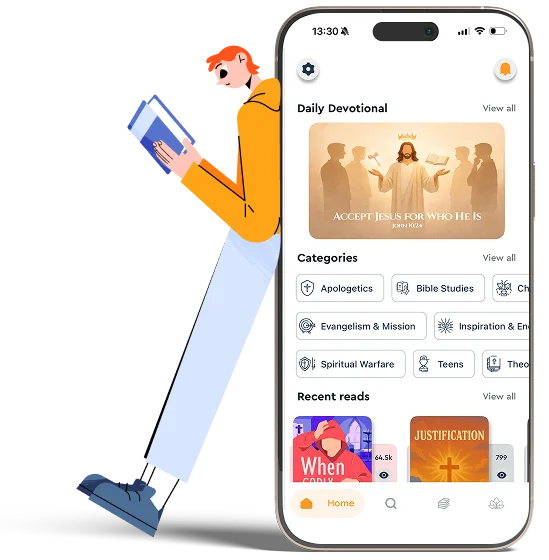
Time is the usual problem. Christian books for struggling with faith tend to be long, and doubt makes it hard to focus on anything. Holy Reads has summaries of over 1,000 Christian books in reading, audio and video formats. Listen to two or three on your commute and you’ll know which author is talking to you.
Then get that book and read the whole thing slowly, with your Bible nearby. Christian books about doubt can’t believe on your behalf. What books about faith and doubt can do is show you that wiser people asked your exact question long ago, and kept finding God on the other side of it.