

You can have a whole shelf of Christian books on grief and still be staring at the ceiling at 3 a.m., chewing on the same worry you chewed on yesterday. More reading won’t fix that. Something has to get past your eyes and settle a lot deeper.
The Bible has a word for that, and Christians have mostly let yoga studios and sleep apps run off with it. The word is meditate. Scripture means something by it, and it isn’t what the soothing voice in your wellness app has in mind.
What Is Biblical Meditation, and What Does Scripture Say About It?
Psalm 1 describes the blessed person as someone “whose delight is in the law of the LORD, and who meditates on his law day and night” (Psalm 1:2). The Hebrew verb there is hagah. It means to murmur, or mutter under your breath. Isaiah uses the very same word for a lion growling over its kill (Isaiah 31:4).
Keep that lion in your head. It’s the clearest picture you’ll get of the biblical meaning of meditate. A lion doesn’t sniff its dinner and stroll away. It digs in and growls, and good luck to anyone who tries to take that meal. Meditation in the Bible is a lot like that lion, honestly. You take a handful of words God said and you don’t let go of them. You mumble them while you’re doing the dishes. You say them again on the drive to work. Eventually they stop sounding like somebody else’s sentence and start sounding like something you’d say.
Joshua heard this right before he led Israel across the Jordan. “Keep this Book of the Law always on your lips; meditate on it day and night, so that you may be careful to do everything written in it” (Joshua 1:8). Check the last few words of that verse. God fully expected all that muttering to turn into doing.
In plain terms, the biblical definition of meditate is taking one small piece of God’s Word and keeping it in front of you, longer than feels natural, until it starts changing the way you live.
How Is Biblical Meditation Different From Other Forms of Meditation?
Most meditation apps want your head empty. Slow your breathing, they say, and let the thoughts float off somewhere, like leaves going down a creek. Fine. Whatever that does for people, the whole point is to end up with nothing in there.
Scripture goes the other direction. “I meditate on your precepts and consider your ways,” the psalmist writes (Psalm 119:15). That sentence has stuff in it. Precepts. Ways. And a real Person on the other end who said them first.
That one difference reshapes everything else. Secular techniques usually treat your thoughts as the problem to get rid of. The Bible says the problem is the wrong thoughts, and then it gives you better ones to hang on to. Paul tells the Philippians to set their minds on whatever is true, noble and right, and then he just says, “think about such things” (Philippians 4:8).
The direction changes too. Secular meditation turns inward, looking for calm somewhere inside you. Biblical meditation looks up, toward a God who speaks and actually wants to hear back. David closes Psalm 19 hoping “this meditation of my heart” will please the Lord (Psalm 19:14). He wasn’t meditating into thin air. He was talking to Someone.
Bible Verses That Explain the Purpose of Christian Meditation
Read the bible verses about meditation in one sitting, maybe on a slow Sunday afternoon, and you’ll see the same few reasons pop up again and again. Nowhere does God tell anyone to meditate just to unwind.
Stability comes up first. “You will keep in perfect peace those whose minds are steadfast, because they trust in you” (Isaiah 26:3). The peace in that verse grows out of a mind that’s anchored in God.
Memory comes up right after. When the psalmist couldn’t sleep, he skipped the sheep. “I remember the days of long ago; I meditate on all your works” (Psalm 143:5). Meditating hauls God’s old faithfulness into a present that feels anything but solid.
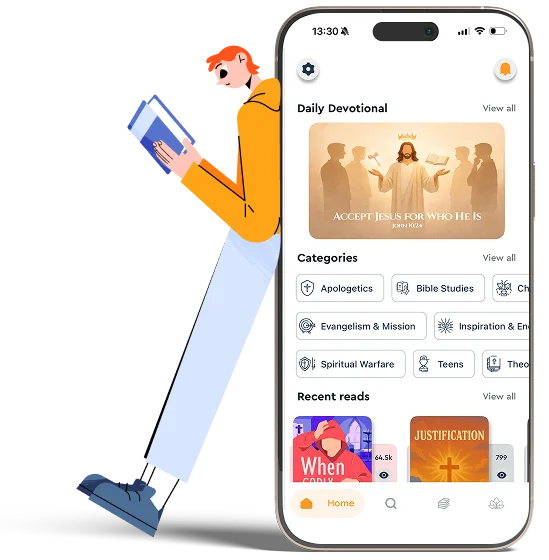
Grief and worry fit right here. Plenty of people buy two or three christian books about grief in the weeks after a funeral, and the books end up stacked on the nightstand with a receipt still tucked inside one of them. Grief does that to your attention span. Holy Reads has more than 1,000 summaries of Christian books in reading, audio and video formats, so you can get the main thing a book is saying in one sitting. Whatever energy is left over can go toward the Bible passages that book keeps pointing you to.
Most christian meditation techniques don’t need much time. Fifteen minutes is plenty. Pick a short passage, maybe four or five verses, and read it slowly. Then read it again, out loud but quietly, which is pretty much what hagah means anyway. Some phrase will grab you. Stop there and talk to God about it in plain words, the way you’d talk to a friend. Take that phrase with you when you get up. Say it in the grocery line if you have to. Daily bible reading and meditation need each other. You read to see what’s there, and you meditate because one verse a day, chewed on properly, will stay with you a lot longer than five chapters skimmed.
Simple Ways to Practice Biblical Meditation With Your Children
Kids meditate without anybody teaching them how. They’ll repeat one line from a cartoon forty times in an afternoon until you’re begging them to stop. You can aim that same habit at Scripture.
Choose one verse a week and slap it on the fridge with whatever magnet’s closest. Say it together over cereal, and then growl it like Isaiah’s lion. Your six-year-old will think it’s a game. It is a game, and the words still go in.
Mornings help a lot with worried kids. A short morning prayer for worry can be as simple as Psalm 56:3: “When I am afraid, I put my trust in you.” Say it in the car before school and let them say it back, eye roll and all.
A morning prayer for peace and protection can borrow Psalm 121:8 just as your child heads out the door: “the LORD will watch over your coming and going both now and forevermore.” Say it at the door every day for a month. Somewhere around week three, don’t be surprised if they beat you to it.
Bedtime only needs one question. “Which word from our verse stuck with you today?” The answers will catch you off guard more often than you’d guess. Deuteronomy 6:7 told Israelite parents to talk about God’s commands “when you lie down and when you get up,” and that rhythm still works just fine.
Grieving families with young kids sometimes find that Christian books on grief written for children say things a parent can’t quite get out. Pull one onto the sofa with your kids tonight. Getting halfway through still counts. Tomorrow at breakfast, trade the verse on the fridge for one about God staying close, and start mumbling it together between bites of toast.