

Be honest. You’ve bought the book. Maybe more than one. Grudem’s Systematic Theology. Sproul’s Everyone’s a Theologian. Possibly a Packer. They’re on the shelf, or on your Kindle, and you’ve read enough of the introduction to feel like you made a genuine effort.
You didn’t finish it. Neither did most people.
That’s not the indictment it feels like. Those books were written for a specific kind of reader with a specific kind of schedule. That reader is not you, at 11 pm, with half a brain left after a full day. And pretending you’re going to become that reader if you just try harder is how theology books stay unread for years.
Your phone is already in your hand. That’s not a spiritual problem. It’s a starting point.
Why Theology Feels Like a Club You Weren’t Invited To
The first time you read a theology book and hit the word “hypostatic” without any explanation, something happens. You either reach for a dictionary or you quietly assume theology is for people who already know things you don’t. Most people choose the second option and feel vaguely bad about it for years.
Here’s what nobody says out loud: the gap between what you believe and why you believe it is bigger for most Christians than they’re comfortable admitting. Not because they’re shallow. Because the tools that were supposed to close that gap were designed for classrooms, not real life.
That gap matters. Not because you need to be able to hold your own in a debate. Because faith that’s never been asked a hard question tends to buckle when real life provides one. And real life always eventually provides one.
What Actually Makes a Theology App Worth Keeping
Most Christian apps solve one problem: access. You get the Bible in thirty translations, a reading streak, and a verse of the day. That’s genuinely useful. It’s not theology.
What you want is an app that explains things. Not just what the church believes about the atonement, but why the different theories exist, what they’re trying to protect, and what’s actually at stake in choosing between them. That’s the difference between knowing a position and understanding an argument.
Audio matters more than most app reviews acknowledge. If you can’t learn while you’re driving or walking or making dinner, you’ve just added one more thing that requires you to sit down and focus. Most people don’t have spare sitting-and-focusing time. Most people have errands.
And watch out for apps that only represent one theological tradition without telling you that’s what they’re doing. Going deep in one tradition is fine. Starting there without knowing it’s a tradition can give you a very confident and very narrow picture of something much larger.
The Apps That Are Actually Worth Your Time
Logos Bible Software is the most serious option on this list. It’s also the most overwhelming at first. Give it a week before you judge it. The free version alone gets you access to commentaries and reference tools that used to require a seminary library card. If you’re the type who wants to trace a word back through the Greek and then read three theologians argue about what it means, Logos is where that happens.
Ligonier Ministries is built around R.C. Sproul’s teaching catalog, and Sproul had a particular gift for making precise theology sound like something a real person said. The content is Reformed and unashamed about it. If you want to understand grace, election, or the holiness of God with actual rigor, spend some time here.
The Bible Project looks lighter than it is. The videos are well-designed and genuinely fun to watch, and it’s easy to assume that means they’re not serious. They are. The biblical theology underneath those animations is careful and substantive. Start with their Torah series or their theme videos on covenant or the temple. You’ll come out the other side knowing things you didn’t know you needed to know.
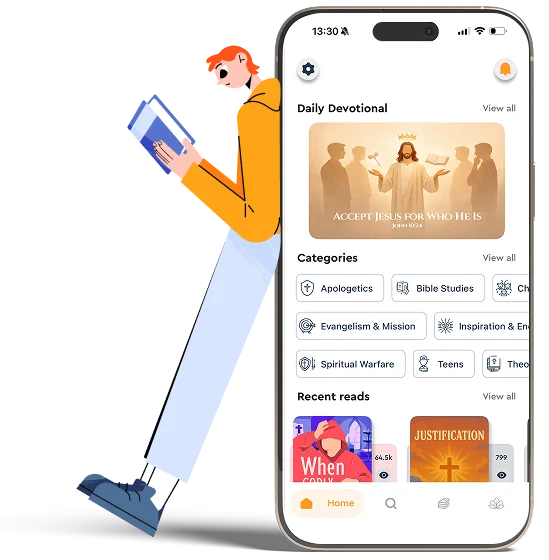
For the books that shaped Christian thinking, not just scripture itself, Holy Reads fills a specific gap. You know Mere Christianity is important. You know The Cost of Discipleship is one of those books serious Christians seem to have read. Holy Reads gives you the actual argument from those books in a form you can get through in one sitting, without losing what made the book worth reading in the first place. It’s not a replacement for the books. It’s the thing that makes you want to read them.
Podcasts deserve a spot here too. Theology in the Raw, Reformed Forum, Ask Pastor John. Free, audio, available everywhere. Don’t underestimate something just because it doesn’t have a subscribe button and a home screen.
How to Actually Make This Stick
Here’s the mistake almost everyone makes: they try to learn everything at once. They download three apps, start four reading plans, and listen to a podcast on the way to work. Two weeks later they’ve burned out on theology content and none of it landed anywhere.
Pick one doctrine. Stay with it for a month. Read about it, listen to people argue about it, figure out what you think. The doctrine of God. The nature of scripture. What salvation actually means. One at a time. Long enough to form a real opinion, not just a borrowed one.
Carry one question through the whole thing: not what did I learn, but what do I now believe, and why. That second question is harder to answer. It’s also the one that does anything to you.
When something makes you uncomfortable, don’t skim past it. That friction is almost always the place where a doctrine is challenging something you assumed without examining. It’s not a sign to slow down. It’s a sign you’re close to something real.
And keep scripture at the center of the whole process. Not as decoration. Not as the thing you quote at the end to make a point feel more legitimate. Paul tells Timothy that scripture is useful for doctrine, for reproof, for correction, for training. That’s an active and slightly demanding list. The theology you’re learning should always be in conversation with it.
You’re not trying to become a scholar. You’re trying to build a faith that actually holds weight. Apps won’t do that for you. But they can get you to the point where the ideas become real enough to live inside of.
That’s worth twenty minutes.